
With Matthews, it’s never been easier to streamline coding, labelling and inspection processes in the Baked Goods industry. Designed to meet your unique processing environment, our solutions are reliable and easy to maintain – so you can continue operating even when the rest of the world is sleeping.
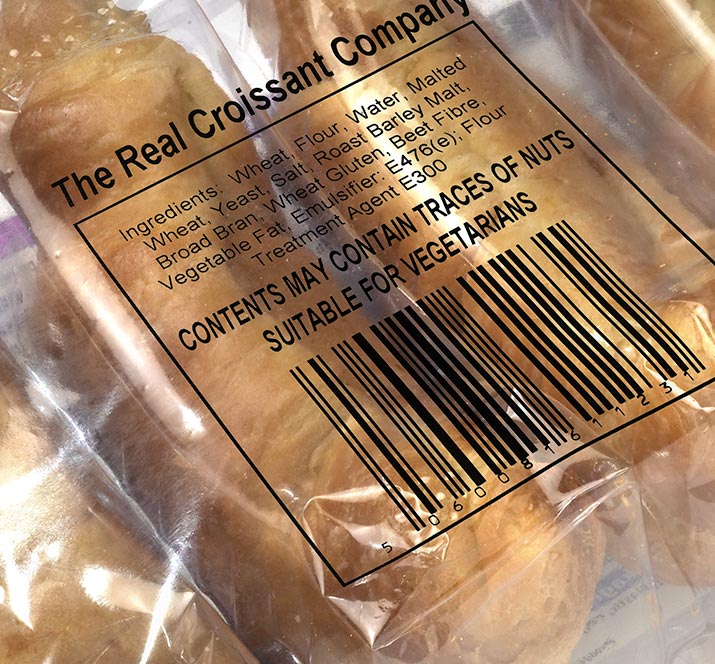
Primary or secondary packaging of bakery products needs to be coded with high quality barcodes, best before dates, batch codes, company text and graphics, and nutritional panels.
Matthews provides a range of small and large character inkjet printers and Lasers that can code onto a variety of porous and non-porous packaging materials used for bakery products, including paper, cardboard or plastic film.
We can help you choose the right technology for your application. For example, we know that Lasers are well suited to code bag ties, and have also been specifically developed to code flexible film without puncturing holes in it. Many baked goods manufacturers also take advantage of having a generic company branded film and use Thermal Transfer Overprinter (TTO) to print the product specific variable information, including barcodes and date code information, onto this.
Matthews can provide a tailored solution for your bakery business and its needs. Tap into our experience working with large multi-nationals to small family businesses in the bakery goods sector.
We’re proud to supply premium coding and labelling systems and software Australia wide. Our innovative products and solutions are available across Melbourne, Canberra, Sydney, Brisbane, Darwin, Perth, Adelaide, Hobart and everywhere in between. Get in touch with our team today to see how your business can benefit.
.png)
.png)


.png)
.png)
.png)
.png)
.png)
.png)
.png)
.png)
.png)